I’m going to walk you through the top-rated 15 best crypto wallets, focusing on security, supported coins, pricing (free + paid), and ease of use. I’ve personally used a bunch of these cryptocurrency wallets over the years.
Quick summary: The best wallets for crypto storage are ELLIPAL Titan 2.0, Ledger Nano Gen5, MetaMask, Trezor, Trust Wallet, Tangem, Coinbase Wallet, SafePal, Exodus, and Phantom Wallet.
List of the Top 15 Best Crypto Wallets in 2026 (Ranked & Reviewed)
To give you a quick overview, here’s a ranked list of the 15 best crypto wallets for 2026…
- ELLIPAL Titan 2.0: Most secure and popular cold wallet (no WiFi, no cellular, no Bluetooth, QR-code based)
- Ledger Nano Gen5: Best hardware wallet (trusted by over 10M users)
- MetaMask: Best browser-based crypto wallet (supports Ethereum and all layer-2 networks)
- Trezor Safe 5: Anonymous Bitcoin wallet (Tor browser and transaction mixing support)
- Trust: Best mobile wallet (for Android and iOS users)
- Tangem: Most user-friendly crypto wallet (Tap-and-go like a credit card)
- Base: Best crypto wallet for Coinbase users
- SafePal: Best multi-chain crypto wallet (both hardware + software options)
- Exodus: Best crypto desktop wallet (for Windows, Mac, Linux)
- Phantom: Best crypto software wallet
- Keystone 3 Pro: Top decentralized wallet (air-gapped cold crypto wallet)
- Atomic Wallet: Best non-custodial crypto wallet
- Ledger Nano X: Highest rated crypto wallet (oldest and sold 5M+ units)
- ELLIPAL X Card: Safest crypto wallet for beginners
- Electrum: Open-source wallet for Bitcoin (download personal BTC node)
My Personal Picks: 2 Most Secure Crypto Wallets Right Now
These are my best personal crypto wallets for both long-term storage and secure DeFi access. Both of these hardware cold wallets support thousands of altcoins, NFTs, staking, DeFi browser, crypto-to-crypto swaps, fiat-on-ramp, and many more advanced features. So, I strictly recommend you to go for only these cryptocurrency wallets if your budget supports.
Comparing Best Wallets for Crypto Storage
To help you see the differences at a glance, here’s a comparison table of the top crypto wallets we gonna discuss. I’ll compare wallet type, what assets they support, who they’re best for, and the approximate price:
| Wallet | Type | Supported Assets | Best For | Price |
|---|---|---|---|---|
| ELLIPAL Titan 2.0 | Hardware (Cold, air-gapped) | 40+ blockchains (10,000+ tokens) | Maximum security offline storage | ~$129 USD |
| Ledger Nano Gen5 | Hardware (Cold, USB/Bluetooth/NFC) | 100+ blockchains (15,000+ assets) | All-around hardware, touchscreen ease | $179 USD |
| MetaMask | Software (Hot, browser/mobile) | EVM networks (Ethereum & dozens) | DeFi and Web3 on desktop/mobile | Free |
| Trezor Safe 5 | Hardware (Cold, USB) | 1000+ coins & tokens | Open-source cold storage, Bitcoin & alts | $169 USD |
| Trust Wallet | Software (Hot, mobile) | 70+ blockchains (4.5M+ assets) | Mobile users and beginners | Free |
| Tangem Wallet | Hardware (Cold card, NFC) | 70+ blockchains (13,000 tokens) | Simple card-based security | ~$55 (2-card pack) |
| Base (Coinbase Wallet) | Software (Hot, mobile/extension) | Multi-chain (ETH, Base, BTC, SOL) | Coinbase ecosystem users | Free |
| SafePal S1 | Hardware (Cold, QR-sign) | 50+ blockchains (30k+ tokens) | Affordable multi-chain cold storage | ~$50 USD |
| Exodus | Software (Hot, desktop/mobile) | 260+ cryptos (all major tokens) | Desktop wallet with rich features | Free |
| Phantom | Software (Hot, browser/mobile) | Solana, Ethereum, Polygon | Solana & NFT enthusiasts | Free |
| Keystone 3 Pro | Hardware (Cold, QR, fingerprint) | 50+ blockchains (via apps) | Maximum security & openness | $149 USD |
| Atomic Wallet | Software (Hot, desktop/mobile) | 60+ blockchains (1200+ assets) | All-in-one features (swap, stake) | Free |
| Ledger Nano X | Hardware (Cold, USB/Bluetooth) | 100+ apps (15000+ coins) | Proven mobile-friendly hardware | $119 USD |
| ELLIPAL X Card | Hardware (Cold card, NFC) | 40+ chains (10,000+ tokens) | Ultra-portable cold storage | $69 USD (1 card) |
| Electrum | Software (Hot, desktop/mobile) | Bitcoin only | Bitcoin power users | Free |
Best Cryptocurrency Wallets Reviewed
Now, I am going to review each of these best crypto wallets in detail. I’ll cover what each wallet is, its key features, and a quick list of pros and cons. Well, this way, you can easily compare and decide which one fits your needs. Let’s dive into the reviews…
1. ELLIPAL Titan 2.0: Most secure and popular cold wallet
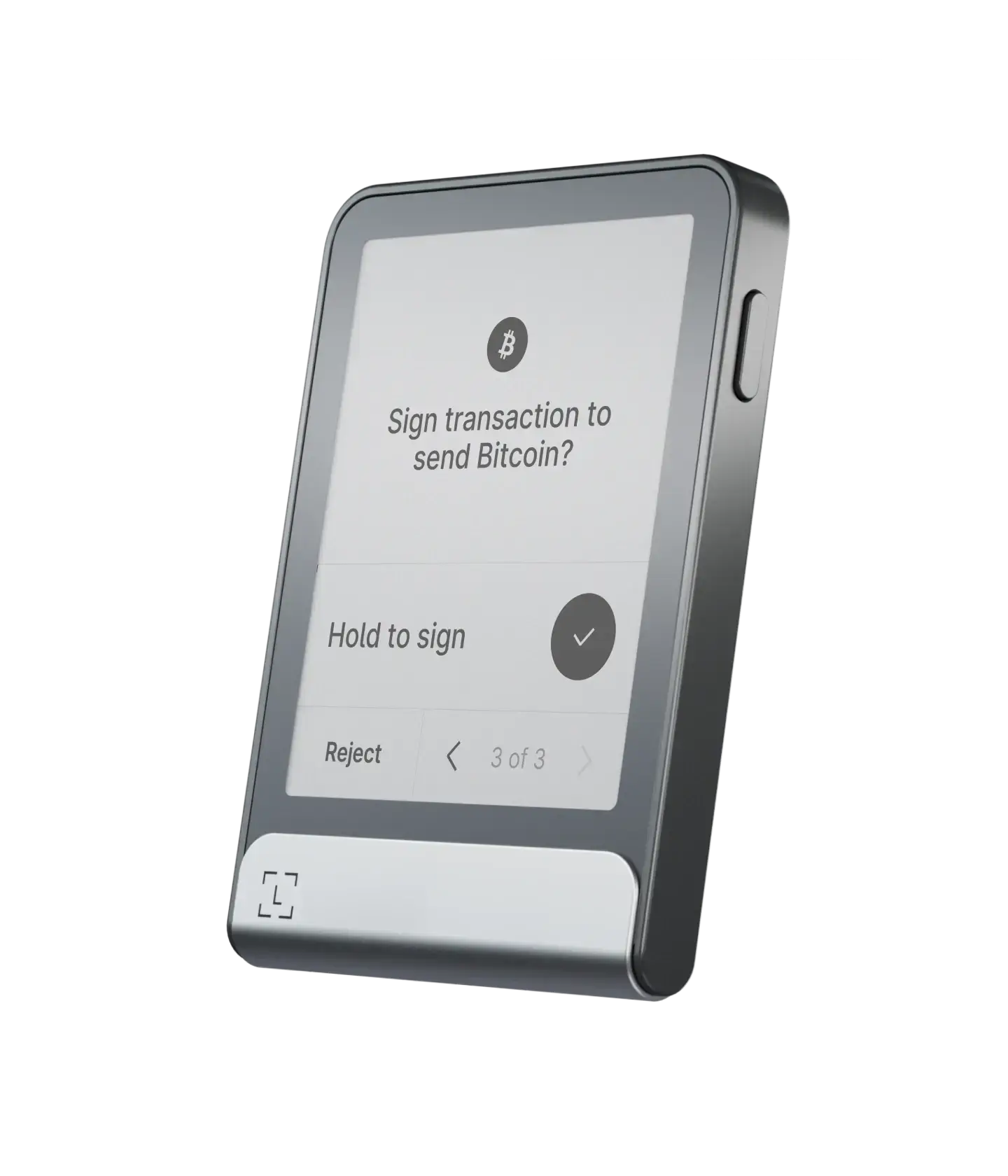
ELLIPAL Titan 2.0 is the most secure crypto wallet with an air-gapped design currently available on the market. You probably know that hackers can only steal what they can reach via the internet, so ELLIPAL designed this device with zero connection points. It has no Wi-Fi, no Bluetooth, and absolutely no USB ports.
It relies entirely on QR codes to transmit data. You simply need to scan a code on the wallet screen with your phone camera to sign a transaction. Also, I really like the 4-inch IPS touchscreen on this crypto wallet. You see, most crypto hardware wallets have tiny screens that are hard to read, but the Titan 2.0 looks and behaves like a small smartphone. It makes checking your address and approving transactions super easy.
You can also check out my list of the best cold storage wallets…
Key Features
- 100% air-gapped device (no Wi-Fi, USB, or Bluetooth – uses QR codes only)
- Large 4-inch color touchscreen for easy use
- Supports 40+ blockchains and 10,000+ coins, tokens, and NFTs
- Secure Element chip (CC EAL5+) with anti-tamper self-destruct mechanism
- Companion mobile app for buying, swapping, staking, and DApp access via WalletConnect
2. Ledger Nano Gen5: Best hardware wallet
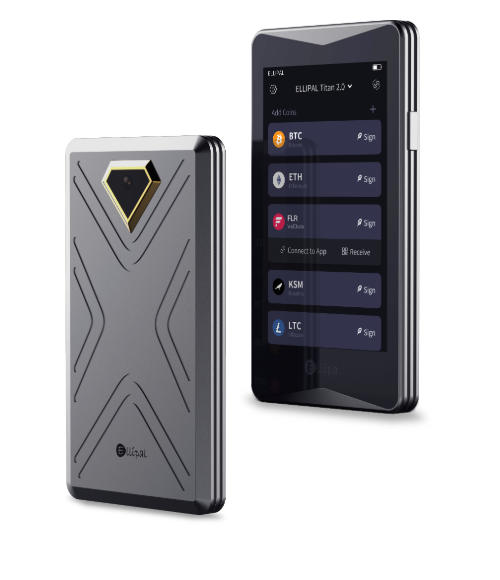
Ledger Nano Gen5 is the latest crypto wallet from Ledger that features a curved E-Ink touchscreen. You get a much smoother experience now because the interface is responsive and intuitive. Plus, they added a customizable “always-on” display, so you can show off your favorite NFT.
Again, security remains the primary selling point here since it uses the new ST33K1M5C CCEAL6+ secure element chip. This is the same grade of tech used in passports and credit cards to keep data lockdown. Your private keys never leave this isolated environment. You also get a “Security Key” card in the box that acts as a physical backup for your recovery.
Key Features
- E-Ink touchscreen (2.8”): high-contrast display with touch, making it easy to read and use
- Multiple connectivity options: USB-C, Bluetooth, and NFC
- Supports 100+ blockchains and 15,000+ coins and tokens
- Secure Element (EAL6+) and Ledger’s custom OS for strong security
- Pairs with the new Ledger Wallet app for buying, swapping, staking, and even 2FA logins on websites
3. MetaMask: Best browser-based crypto wallet
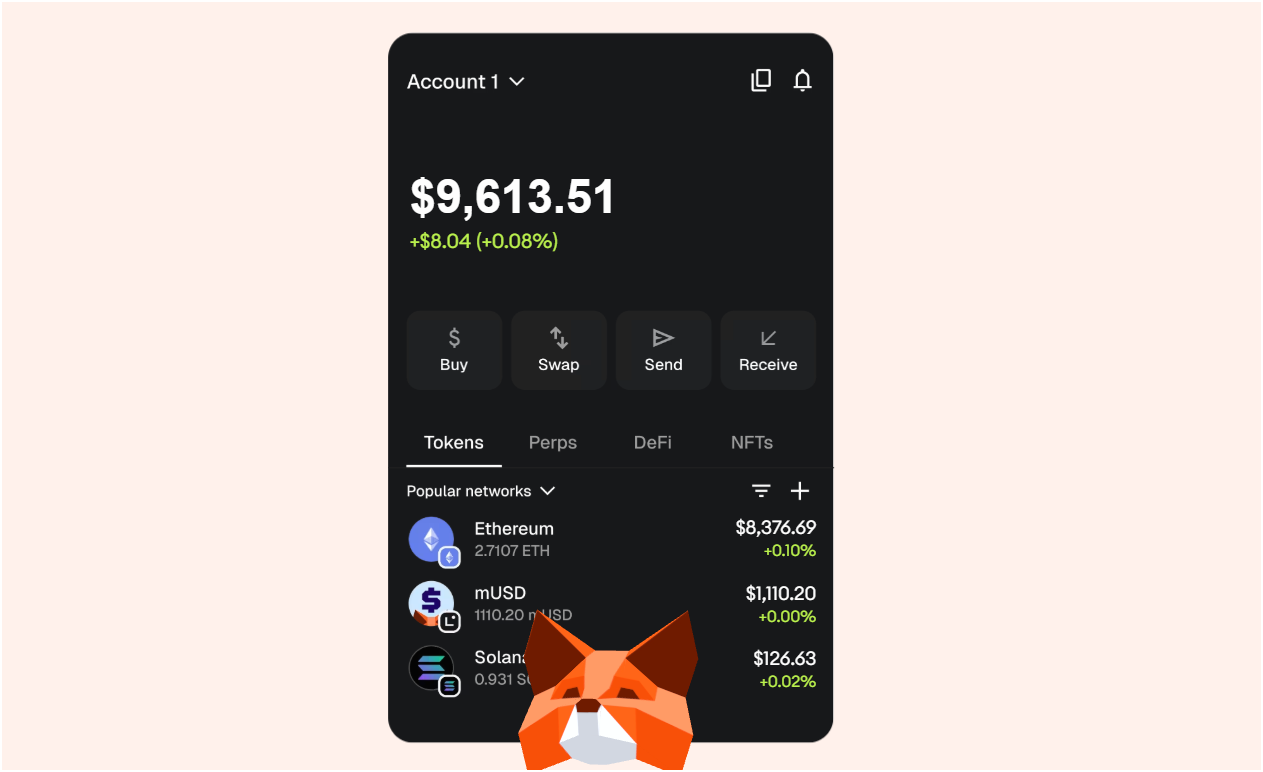
Metamask is one of the best browser-based crypto wallets right now. Also, it is the most widely used non-custodial software wallet for the Ethereum ecosystem. You literally cannot use DeFi and Web3 applications on a computer without bumping into MetaMask eventually.
Basically, it functions as a browser extension that turns your Chrome or Firefox into a direct gateway to the blockchain. I use it almost every day to connect to decentralized exchanges like Uniswap or to buy NFTs on OpenSea because it is universally supported.
The MetaMask team has improved the user interface a lot recently to make transaction data clearer. It used to be a bit confusing, but now it clearly shows what permissions you are granting. They also added native support for Layer 2 networks like Base, Polygon, and Arbitrum, so you aren’t just stuck on the Ethereum mainnet paying high gas fees.
Key Features
- Browser extension wallet (Chrome, Firefox, Brave, etc.) + optional mobile app
- Supports Ethereum and any EVM-compatible networks (you can add 100+ custom networks)
- Stores Ethereum, ERC-20 tokens, NFTs, and more (30+ million users worldwide)
- Built-in token swap feature and NFT viewer
- Connects easily to DeFi apps, NFT marketplaces, and games
4. Trezor Safe 5: Anonymous Bitcoin wallet
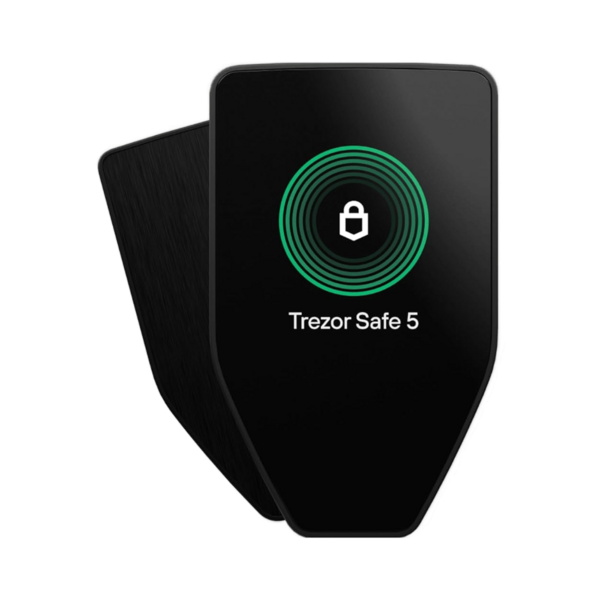
Trezor Safe 5 is the open-source hardware wallet featuring a color touchscreen and haptic feedback. Well, for Bitcoin storage, this crypto wallet is best because of the specific firmware option. It supports a “Bitcoin-only” mode that removes all the code for other altcoins. Hence, this makes the system simpler and minimizes the attack surface if you only care about BTC.
The wallet is also famous for offering privacy features such as Tor browser for IP hiding, CoinControl, and CoinJoin. It also uses a new 20-word backup standard that is easier to write down and secure. Plys, it supports Sgamir Backup. You can even split your backup into shares, so if you lose one piece of paper, you don’t lose your money.
Key Features
- Vibrant color touchscreen with haptic confirmation (view and tap to confirm transactions)
- Open-source firmware and software (code is public for transparency)
- 9,000+ coins and tokens (supports Bitcoin, Ethereum, ERC-20s, and many others)
- Option to run Bitcoin-only firmware for a focused, minimal attack surface
- Supports advanced passphrase (25th word) and Shamir Secret Sharing for backups
5. Trust: Best mobile wallet for iOS and Android
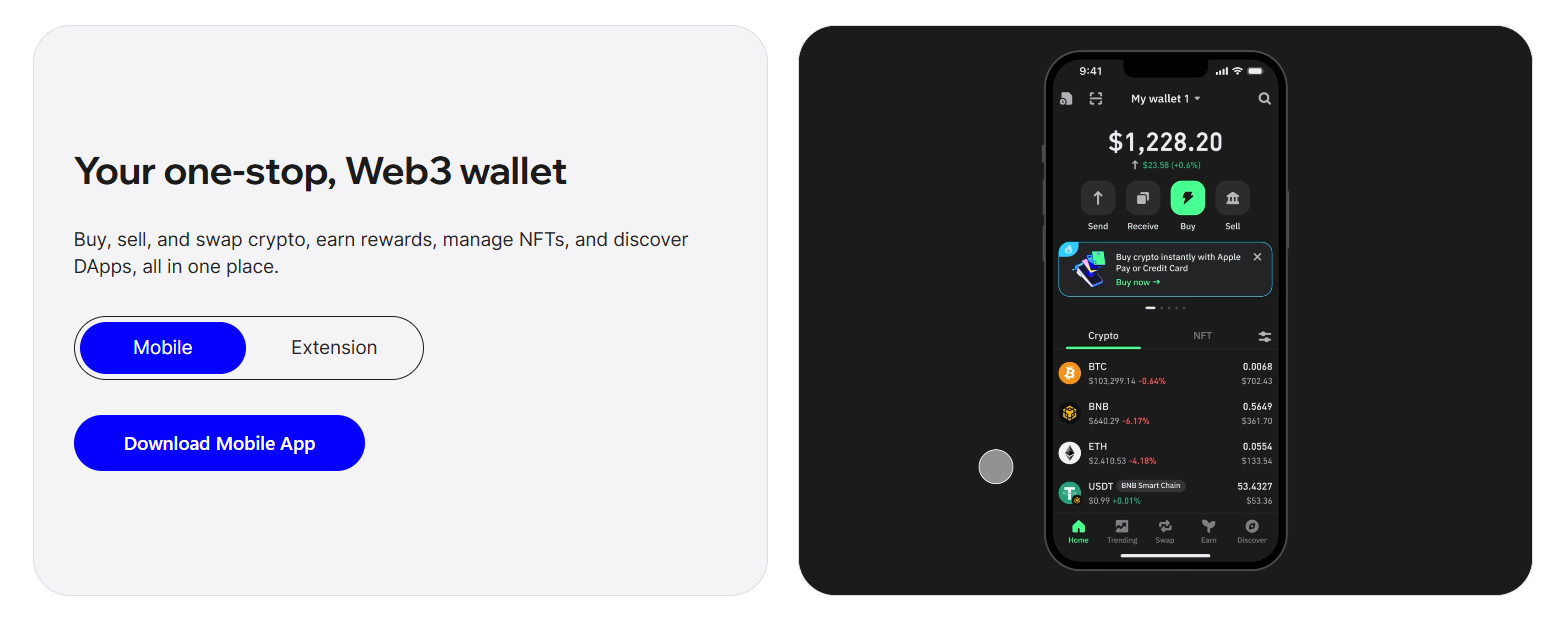
Trust Wallet is a popular and most reliable mobile-first crypto wallet that supports over 10 million digital assets across 100+ blockchains. It was acquired by Binance a while back, so it has significant development resources behind it.
The interface is super clean and displays your entire portfolio balance on the main screen. You can buy crypto directly in the app using a credit card through third-party providers, though the fees can be a bit high compared to an exchange. Well, security is good for a software wallet since it is non-custodial. It also has a real-time security scanner that warns you if you are about to interact with a malicious contract or risky address.
Key Features
- Mobile app wallet for iOS and Android (simple interface, quick setup)
- Supports 100+ blockchains and 10+ million assets (BTC, ETH, BNB Chain, Solana, Polygon, and many more)
- Built-in DApp browser to access DeFi apps directly inside the wallet (on Android; on iOS, it opens externally due to App Store rules)
- Allows staking of certain coins (e.g., stake BNB, ATOM, TRX, etc., to earn rewards)
- Integrated fiat on-ramp (you can buy crypto in-app via third-party providers)
6. Tangem: Most user-friendly crypto wallet
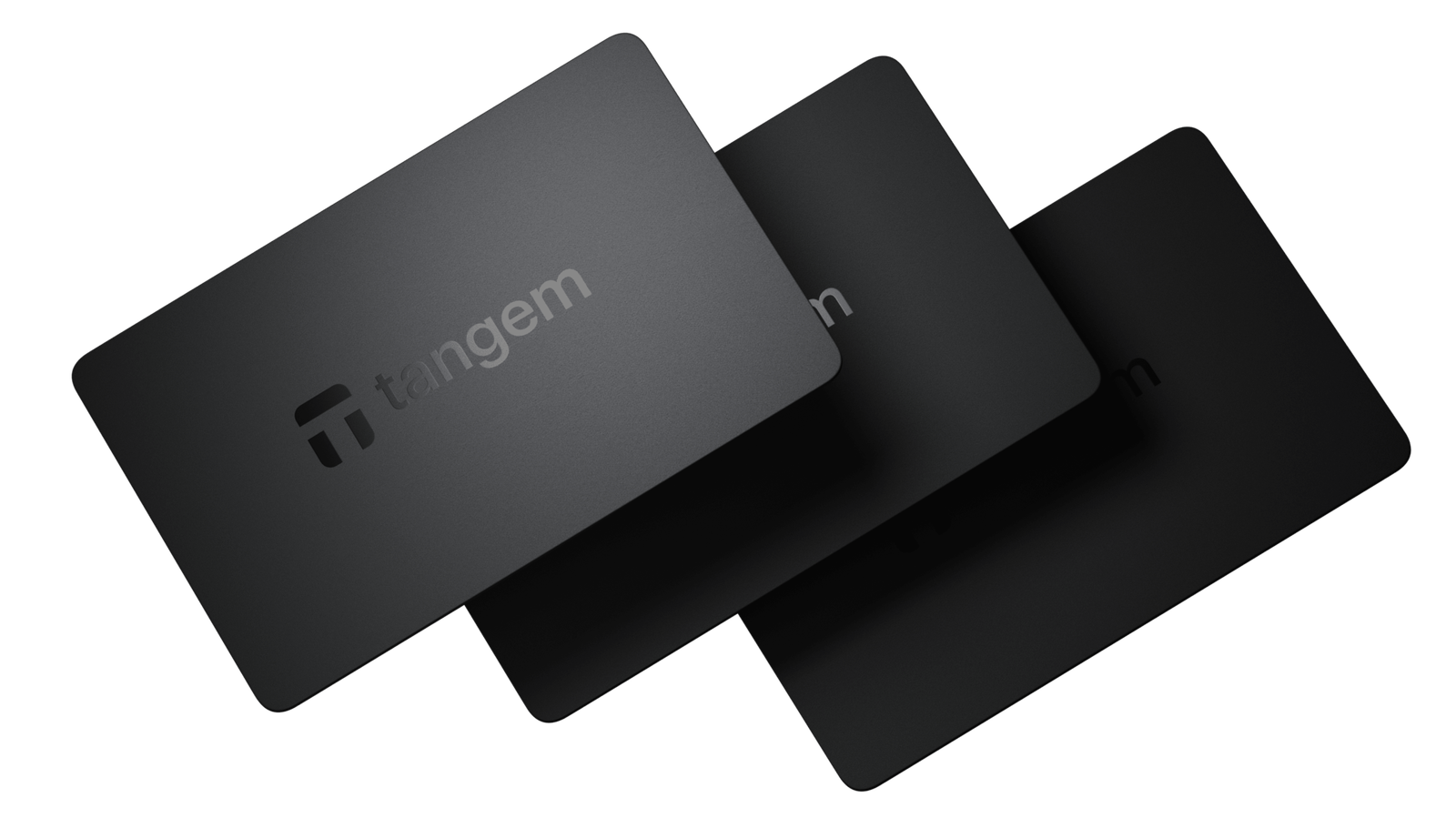
Tangem is among the best user-friendly crypto wallets with NFC-based signing. There are no buttons, no screens, and no batteries to charge. It looks exactly like a standard credit card you have in your wallet right now. To use it, you just tap it against the back of your smartphone using NFC technology. It is an incredibly simple and easy-to-use cryptocurrency wallet.
It comes in a pack of two or three cards, so you have physical backups. Hence, if you lose one card, you just use the second one to access your funds. You must connect all cards during the initial setup to make them copies of each other. The warranty is also decent, 25 years to be exact. They are waterproof (IP68 rated), dustproof, and even temperature resistant.
Key Features
- Credit-card sized hardware wallet with NFC tap-to-sign technology
- Comes in packs (e.g., 2-card or 3-card sets) for easy backup without seed phrases
- Supports 16,000+ tokens on 70+ blockchains (Bitcoin, Ethereum, BSC, Polygon, Solana, and many more)
- Secure Element chip (certified EAL6+) – highest security grade among card crypto wallets
- 25-year warranty and IP68 durability (waterproof, temperature resistant)
7. Base App: Best crypto wallet for Coinbase users
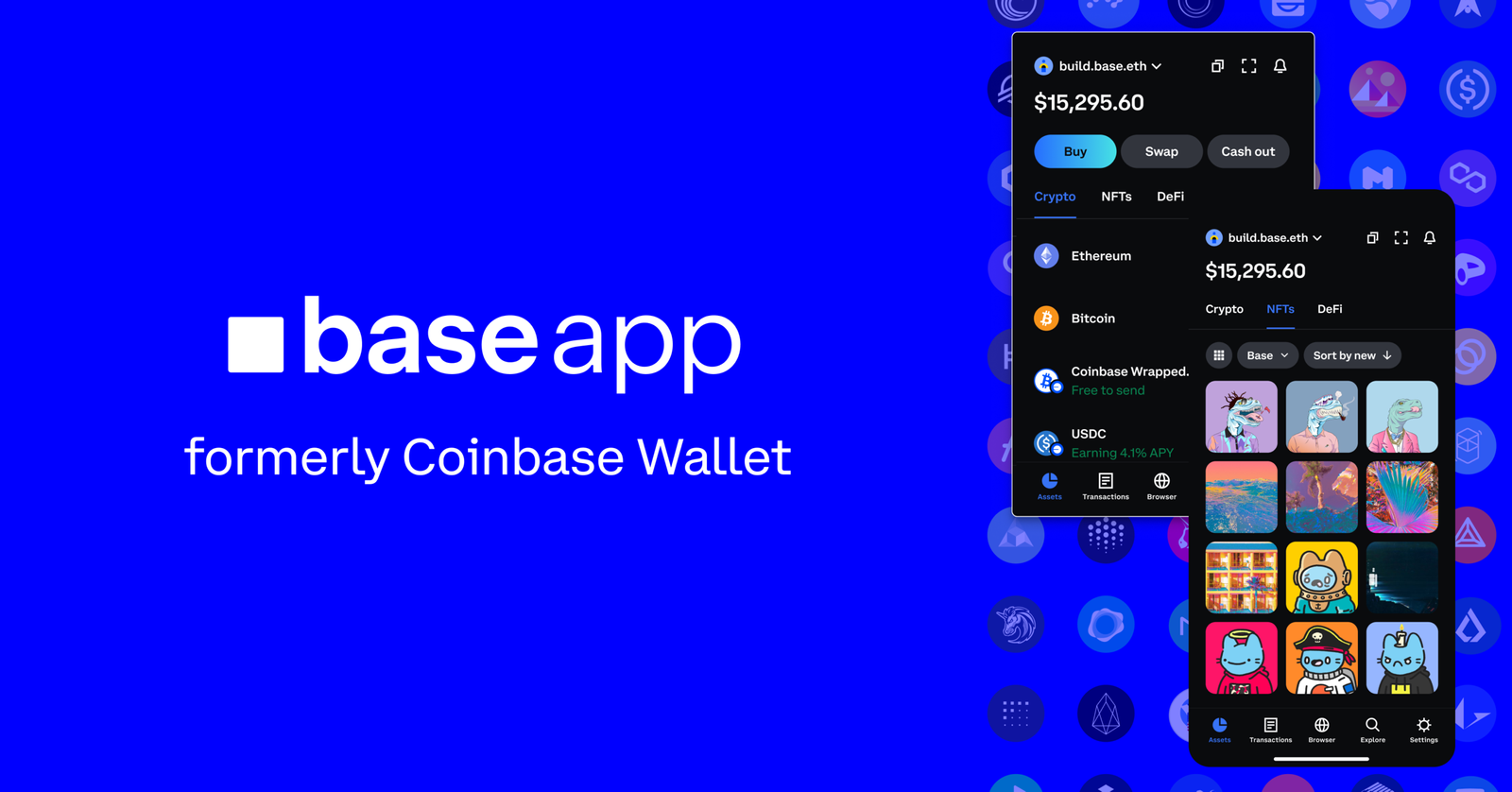
Base (also known as Coinbase Wallet) is another one of the best crypto wallets with easy integration of the Coinbase exchange. It’s available on iOS, Android, Chrome, and Brave browsers, and you can link it directly to your Coinbase exchange account or use it independently.
You can buy crypto with over 130 fiat currencies through local on‑ramp partners, swap tokens across 80+ decentralized exchanges, and bridge assets between networks like Base, Ethereum, Optimism, and Polygon. The wallet has a dApp browser and improved token detection, and you get a free ENS (Ethereum Name Service) address. You can also pair it with a hardware wallet for cold storage.
Key Features
- Mobile wallet app (formerly Coinbase Wallet) for iOS and Android, plus a Chrome browser extension
- Supports multiple chains: Ethereum, Base network, other EVM chains, Solana, and even has support for Bitcoin & others
- Easy Coinbase account integration: connect your exchange account to fund your wallet in a few taps
- Built-in DApp browser and WalletConnect support to interact with DeFi and NFTs
- Stores NFTs and offers a cloud backup option for the recovery phrase (optional)
8. SafePal: Best multi-chain crypto wallet
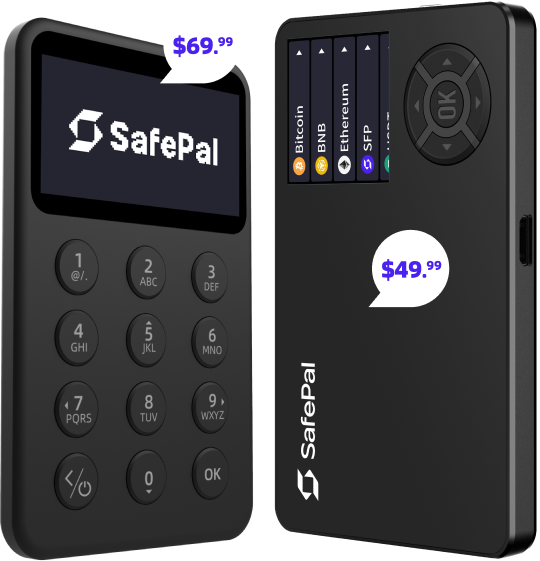
SafePal is a hardware wallet that I think offers great value for its price. It was one of the first crypto wallets funded by Binance, and it costs around $49. The device is fully air‑gapped; there’s no Bluetooth, Wi‑Fi, NFC, or USB connectivity.
You can instead use QR codes through the SafePal app to sign transactions, similar to the ELLIPAL Titan but at a lower price point. It supports more than 50 blockchains and 30,000+ tokens. A built‑in camera scans the QR codes, and there’s a microSD slot for firmware updates. It’s a great budget choice for those who want cold crypto storage without spending a lot.
Key Features
- SafePal S1 hardware wallet: air-gapped device with QR code communication, 1.3-inch color screen, camera, and offline self-destruct mechanism
- SafePal mobile app (and browser extension) for managing assets and connecting to DeFi, which can be used with or without the hardware
- Supports 50+ blockchains and 30,000+ tokens, including BTC, ETH, BNB Chain, Polygon, Avalanche, Solana, TRON, etc.
- Secure Element chip (EAL5+) and a self-destruct feature that wipes the device if a breach is detected
- Integrated SafePal Swap and DApp marketplace in the app for trading and earning
9. Exodus: Best crypto desktop wallet for Windows or Mac
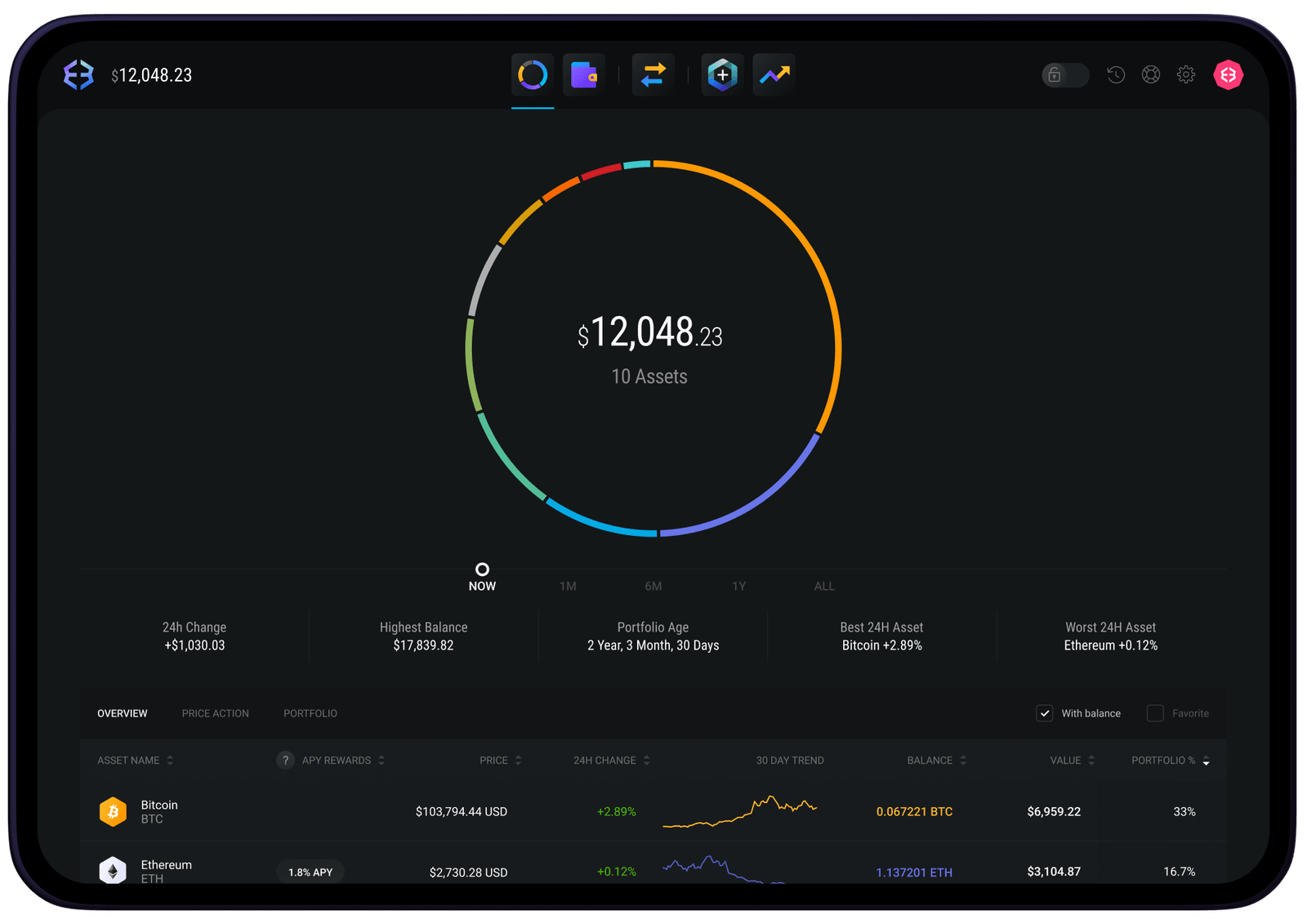
Exodus is one of the best crypto wallets for desktop or laptop users. It has a polished interface that supports more than 500 cryptocurrencies and runs on Windows, macOS, Linux, iOS, and Android.
There’s a built‑in exchange so you can swap coins without leaving the app, and you can track your portfolio value in real time. Well, it isn’t fully open source, but the company has a good reputation and updates the software regularly. The wallet supports password protection and auto‑lock, but there’s no two‑factor authentication, so you need to be careful. Hence, it’s a great crypto wallet for beginners who want a unified experience across devices.
Key Features
- Desktop wallet application (Windows/Mac/Linux) with a beautiful UI and live portfolio tracking
- Also available on mobile and as a browser extension (to connect to Web3 apps)
- Supports 260+ cryptocurrencies natively and over 1,000,000 assets when including all token types
- Built-in ShapeShift/Changelly swap integration for exchanging assets instantly
- Allows staking of ~10+ coins (e.g., ADA, SOL, ATOM, XTZ) and shows earned rewards
10. Phantom: Best crypto software wallet
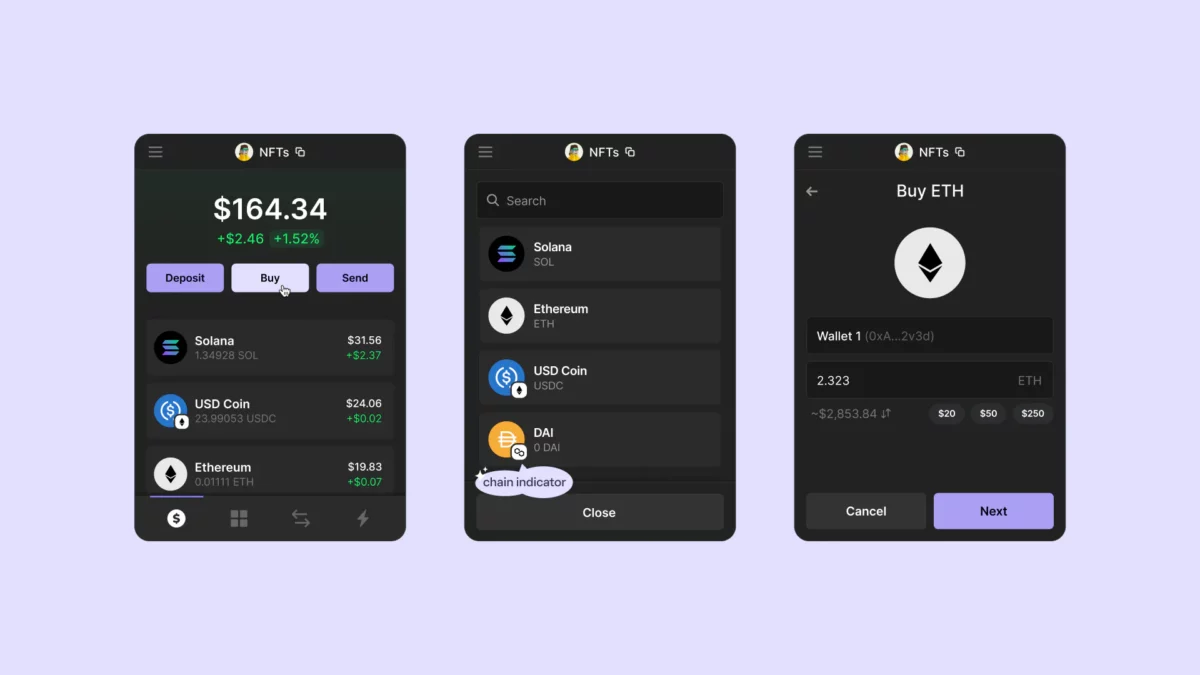
Phantom is the best software crypto wallet that I first used for Solana, and now, it has evolved into a multi‑chain app. It now supports Solana, Bitcoin, Ethereum, Base, Sui, and Monad networks in one app.
Also, its browser extension is smooth and never seems to lag, even when the network is busy. I test it to trade meme coins on Raydium and buy NFTs on Magic Eden. The wallet shows your NFTs in a beautiful gallery view, which is way better than how other crypto wallets just show a text list. You can also check out my list of the best NFT wallets…
Key Features
- Browser extension wallet for Chrome, Brave, etc., and also available as an iOS/Android mobile app
- Originally Solana-focused: manage SOL, SPL tokens, and Solana NFTs with ease
- Now supports multiple chains (Solana, Ethereum, Polygon) in one wallet
- Built-in token swap for Solana, and supports viewing and sending NFTs
- Supports hardware wallet connection (you can connect a Ledger for Solana, for example)
11. Keystone 3 Pro: Top decentralized wallet with 3 CC ELA5+ chips
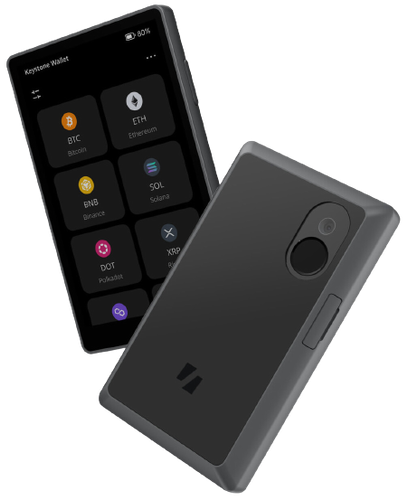
Keystone 3 Pro is the top hardware wallet that utilizes three separate secure element chips. This wallet takes the “air-gapped” concept seriously by removing all communication ports. It looks like a smartphone with a 4-inch touchscreen and a camera on the back. It never connects to the internet directly, so you use QR codes for every single data transfer.
The Keystone supports Shamir backup, letting you split your seed phrase across multiple shares, and it can store up to three separate seed phrases at once. A PCI‑level self‑destruct mechanism wipes the wallet if someone tampers with it, and the firmware is open source.
Key Insights
- 4.0-inch touchscreen hardware wallet with air-gapped QR code signing (no cables or wireless comms)
- Triple secure element chips (three chips to safeguard your private keys and operations)
- Biometric sensor – fingerprint unlock for convenience instead of entering PIN every time
- Fully open-source firmware and wallet schematics (for transparency and community trust)
- Integrates with many software wallets (MetaMask, Keystone app, Solana apps, BTC wallets via PSBT)
12. Atomic Wallet: Best non-custodial crypto wallet
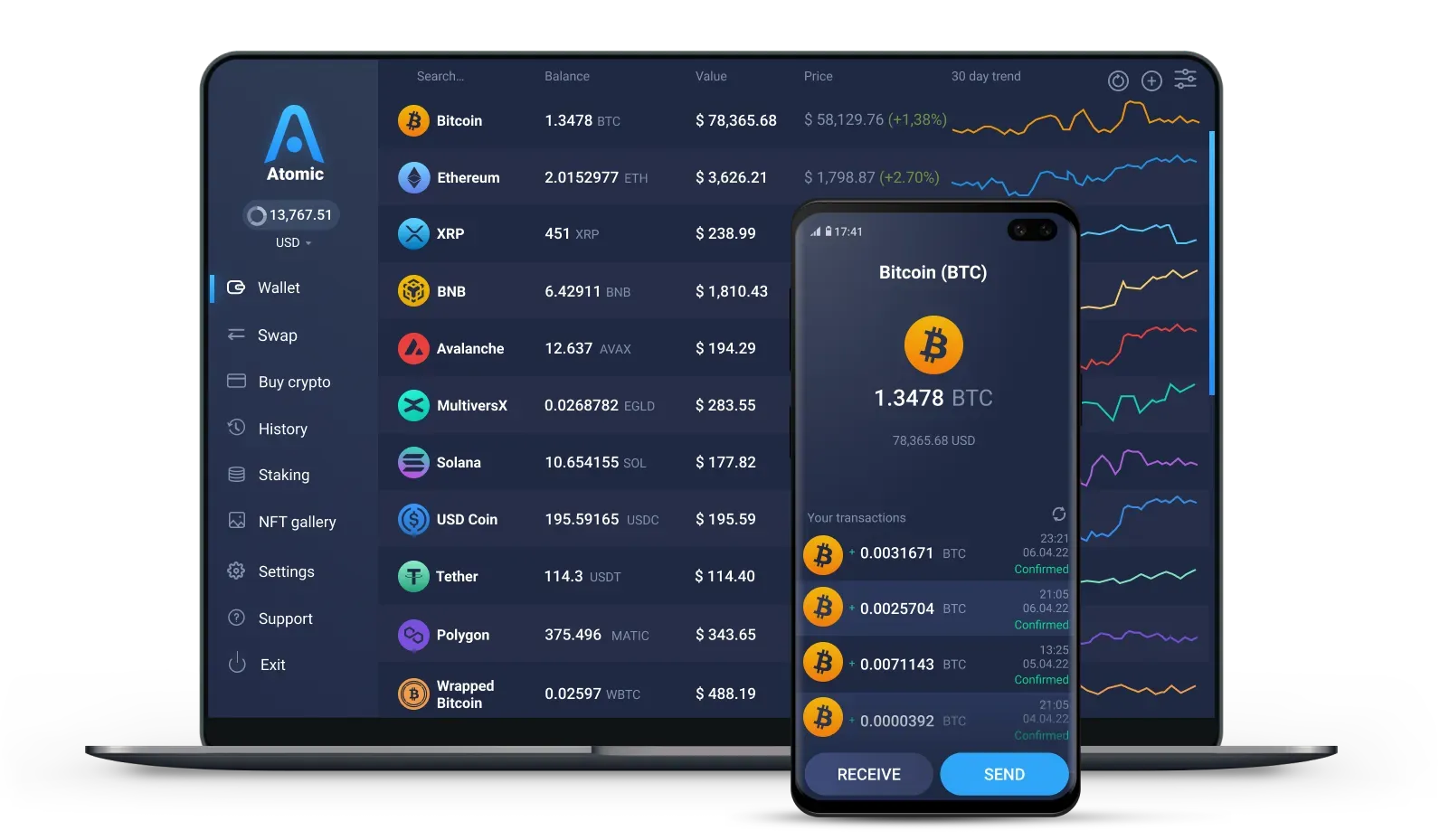
Atomic Wallet is a non‑custodial software wallet. It supports more than 1,200 assets, and you never have to provide any personal information when you download it. The built‑in swap feature uses partners like ChangeNOW to convert tokens, though it’s not a true atomic swap in the cryptographic sense. You can buy cryptocurrencies using Simplex with your credit card.
Also, I like that it supports staking for a lot of Proof-of-Stake coins. You can stake Cardano, Atom, Tezos, and others directly in the validator list. The interface shows you exactly how much APY you will earn before you lock your funds.
Key Insights
- Desktop and mobile wallet app with support for over 60 blockchains and 1,200+ assets
- Built-in Atomic Swap and exchange feature for 100+ crypto pairs (instant swaps powered by partners)
- Buy crypto in-app with a bank card (via Simplex or other payment processors)
- Staking support for 20+ PoS coins (with competitive APYs on some, e.g., up to 5-7% on big coins, and higher on smaller ones)
- Has its own loyalty token, AWC (Atomic Wallet Coin), which provides benefits like cashback on swaps
13. Ledger Nano X: Highest rated crypto wallet
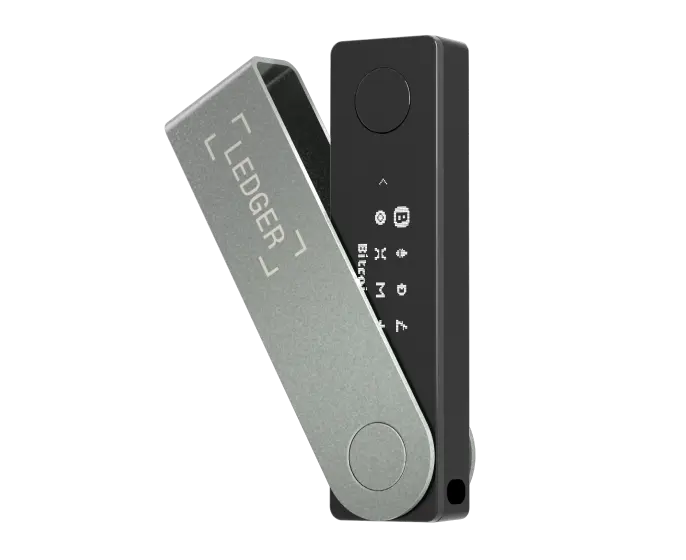
Ledger Nano X is the most popular crypto wallet with over 5M+ units sold so far. It is the Bluetooth-enabled hardware wallet that became the industry standard. It uses the same Ledger Live app as the newer models. You see, this app is fantastic because it lets you buy, sell, swap, and stake right from your computer or phone. The ecosystem of supported apps is huge.
Now, even with the new Gen5 out, the Nano X is still an amazing device because it balances price and performance. It is cheaper now at around $119, which makes it a great deal. It features Bluetooth connectivity, so you can connect it to your iPhone or Android wirelessly without messing with OTG cables.
Key Features
- Compact hardware wallet with Bluetooth and USB-C connectivity
- Manages 5,500+ cryptocurrencies and tokens through Ledger Live and associated apps
- Secure Element chip (CC EAL5+) keeps private keys isolated
- Battery powered (so you can use it on the go via Bluetooth without plugging in)
- Ledger Live app integration: buy/sell, swap, stake certain assets, and view your portfolio
14. ELLIPAL X Card: Safest crypto wallet for beginners
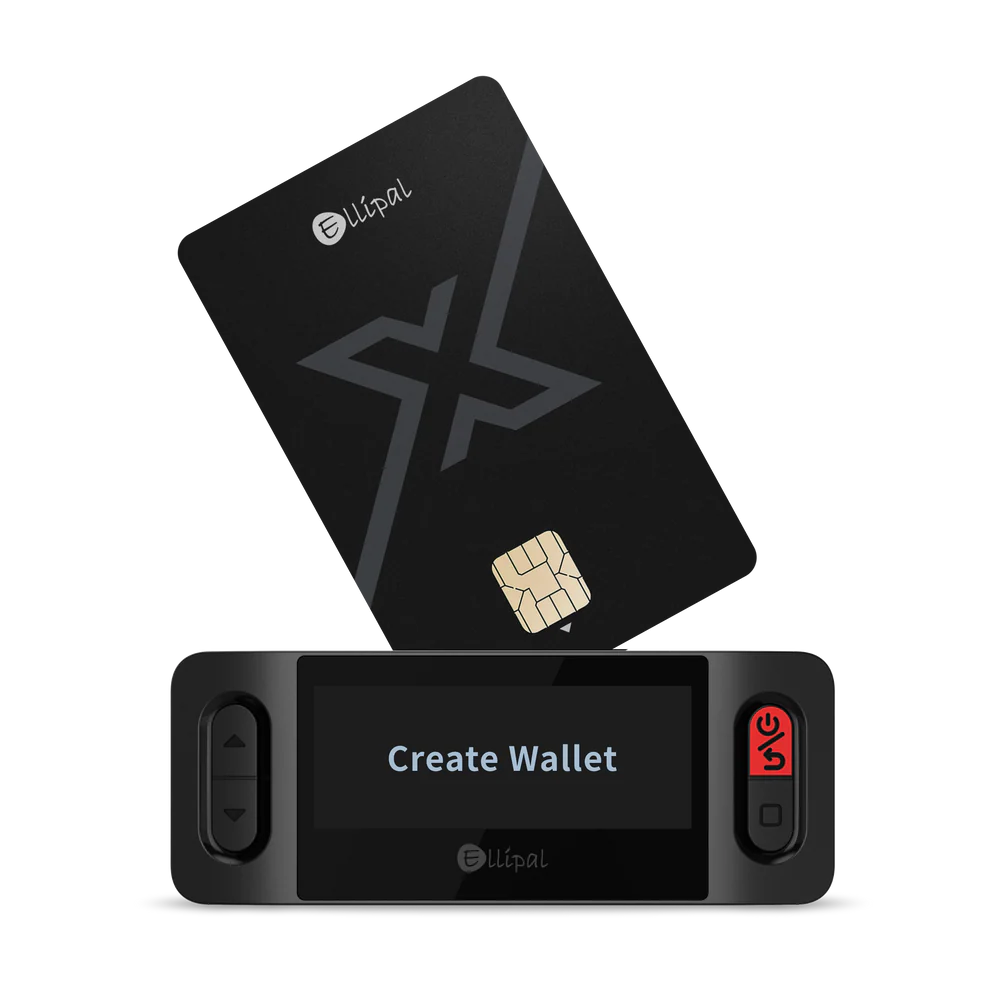
The ELLIPAL X Card is a credit card‑sized best crypto wallet for beginners who want physical security without the complexity. It is air-gapped and uses NFC to communicate with your phone app. Basically, it works the same as the Tangem wallet.
The security is still top-tier despite the small size. It has the EAL6+ secure element chip inside to generate keys. Because there is no USB port and no battery, there is basically no way for a hacker to get in physically or digitally.
Key Features
- NFC-enabled hardware crypto wallet card: sign transactions by tapping card to phone (no cables or Bluetooth)
- Completely air-gapped and offline setup using a Starter device (no network connectivity during key generation)
- Secure Element chip (CC EAL6+) inside the card, with anti-tamper protections
- Supports 40+ blockchains and 10,000+ cryptocurrencies via the Ellipal app
- No battery or maintenance needed on the card (no firmware updates required on the card after setup)
15. Electrum: Open-source wallet for Bitcoin
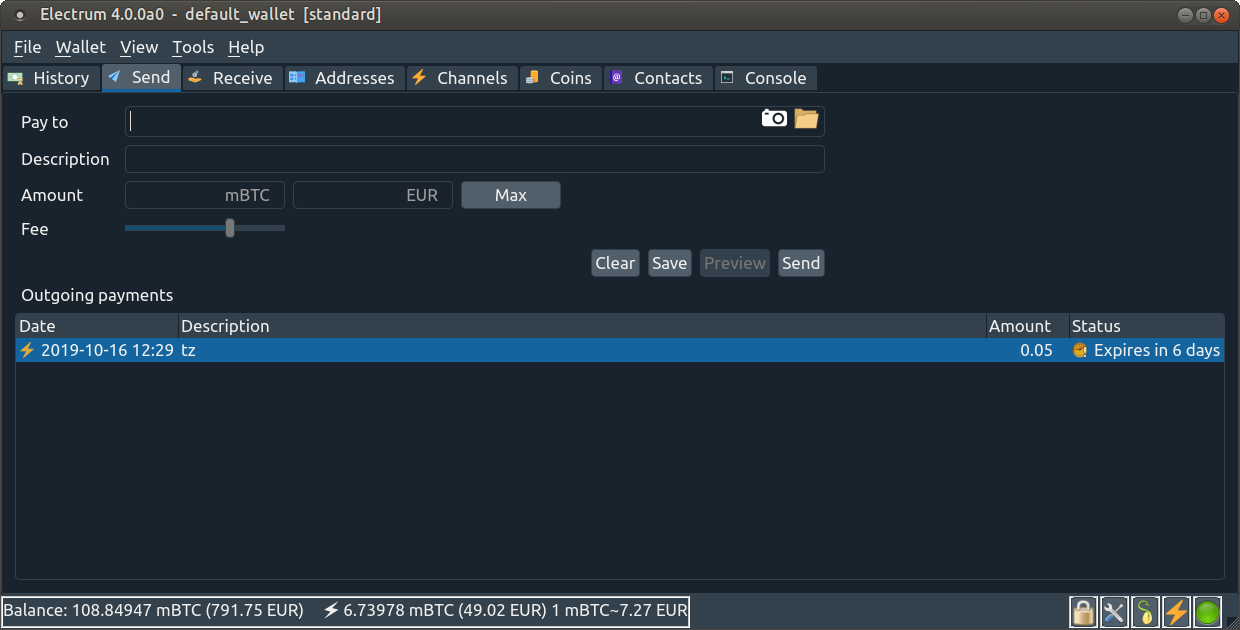
Electrum is a lightweight Bitcoin client that has been around since 2011. Well, this wallet is ugly compared to modern apps. I mean, it looks like Windows 95 software with gray boxes and simple text. But it is fast, lightweight, and incredibly powerful for advanced users. It is Bitcoin only. No Ethereum, no meme coins, just BTC.
It has some very good features as well. You can set the fee to the exact satoshi/byte you want to pay. You can also use “Replace-by-Fee” (RBF) to speed up a stuck transaction by bumping the fee later. It supports the Lightning Network too, which is great for cheap, instant payments. You can even set up multi-sig wallets, where you need multiple keys to authorize spending funds.
Again, it works with almost every hardware crypto wallet on the market. You can plug in your Ledger or Trezor and use Electrum’s interface instead of the native apps. This is great for privacy because Electrum can connect to your own personal Bitcoin node server. If you want more Bitcoin-only devices, check out my list of the most secure hardware wallets for Bitcoin…
Key Features
- Desktop wallet for Bitcoin (Windows, Mac, Linux) with an Android version available
- Open-source and highly extensible (numerous plugins available for added functionality)
- Supports advanced Bitcoin features: multi-signature wallets, hardware wallet integration, Lightning Network (with plugins), etc.
- Uses SPV (simplified payment verification) – quick setup, you don’t need to run a full node (though you can connect to your own node if you want)
- Manual fee control and transaction management (great for optimizing what you pay in fees or scheduling transactions)
How to Choose the Best Crypto Wallet for You?
Here are some tips to help you decide on your best crypto wallet:
Use Cases
Well, you need to ask yourself, “Are you investing for the long term or doing frequent trading and DeFi activities?:
- If you’re HODLing large amounts of crypto for months/years, a hardware wallet (cold wallet) is generally the safest bet. So, you can choose from devices like Ledger, Trezor, Ellipal, Keystone, etc., as they keep your keys offline and give you peace of mind.
- Now, if you’re transacting daily, swapping tokens, yield farming, or dabbling in NFTs, a software wallet (hot wallet) might be more convenient for quick access. Plus, you might even use a combination: e.g., keep the bulk in a hardware wallet and a spending amount in a hot wallet.
Security vs Convenience
There’s usually a trade-off. Hardware crypto wallets provide top-notch security but add a bit of friction (you have to plug in or QR scan to confirm actions). But again, software crypto wallets are super convenient (just a few taps), but your keys are on an internet-connected device.
- If you value maximum security (and can handle a slightly slower process), go for a hardware crypto wallet.
- If you need ease of use for small amounts and experimenting, a software cryptocurrency wallet is fine (just be sure to follow security best practices).
Assets You Hold
You need to make sure the digital wallet supports all the cryptocurrencies you own or plan to buy.
For example, if you have a bunch of Solana and Solana NFTs, Phantom or Trust Wallet could be great. If you mainly hold Bitcoin and Ethereum, Ledger or Trezor will cover that easily, and so will most multisupport software wallets.
But yes, not all crypto wallets support every coin. So, you should always check the wallet’s website for a list of supported assets. (Some wallets can be extended with additional apps or plugins to support more coins.)
Read my in-depth guide on the best multi-currency crypto hardware wallets…
Platform Compatibility
You should consider what devices you use most.
- If you’re always on your phone, you’ll want a good mobile wallet (Trust Wallet, Coinbase Wallet (Base), MetaMask mobile, etc.).
- If you prefer a computer, maybe a desktop wallet like Exodus or Electrum suits you.
Now, also, some hardware wallets work better with desktops (like Trezor, since it’s USB-only) while others also pair nicely with phones (Ledger Nano X via Bluetooth, or air-gapped ones like SafePal with phone scanning).
Beginner Friendliness
Well, if you’re new to crypto, lean towards wallets known for simplicity.
- Trust Wallet, Exodus, and Coinbase Wallet (Base) are quite user-friendly for beginners, as they have very straightforward interfaces and less “jargon” on screen.
- Some hardware crypto wallets like Ellipal Titan 2.0 or Tangem are also aimed at ease-of-use, guiding you during setup.
- On the other hand, a wallet like Electrum or MetaMask might throw more technical info at you, which can be a bit confusing at first (though not impossible to learn).
Backup & Recovery
You need to think about how you’ll manage your backup. You see, all non-custodial best crypto wallets will give you a seed phrase (except certain card wallets like Tangem, which use backup cards). So, you must keep this safe.
- If you feel confident managing a seed phrase, any wallet is fine – just be responsible. Maybe even invest in a metal seed backup to store it.
- If the seed phrase concept worries you, something like Tangem or Ellipal X Card might appeal, since they handle backups through extra cards rather than a written seed (but remember: lose all cards = lose funds, so still be careful!).
Also, check if the wallet offers any additional recovery options: e.g., Coinbase Wallet (Base) lets you back up an encrypted version of your seed to the cloud (Google Drive/iCloud). So, yes, convenient, but some prefer not to trust cloud storage.
Community and Support
It’s worth checking if the wallet has active community support or customer service. You know, beginners might need help or have questions.
- You see, the most popular crypto wallets like Ledger, Trezor, and Trust Wallet have lots of tutorials online and active communities.
- Newer or niche crypto wallets might have fewer resources, meaning you’ll rely on their official support or Telegram/Discord groups if you run into an issue.
What Is a Crypto Wallet?
A crypto wallet is a tool (hardware device or software program) that stores your private keys and helps you interact with blockchain networks.
There are two main categories of wallets:
- Custodial wallets where an exchange or a company holds the keys for you (kind of like a bank holding your money; e.g., if you keep crypto on Coinbase’s exchange, that’s custodial).
- Non-custodial wallets where you hold the keys (the ones we’ve mostly discussed here: hardware wallets, mobile wallets like Trust, etc.). The phrase “Not your keys, not your coins” reflects the crypto ethos that you truly own your crypto only if you control the private keys.
What are the Different Types of Crypto Wallets?
- Hardware Wallets (Cold Wallets): These are physical devices (like a USB stick or small gadget) that store your private keys offline. Well, because they’re offline (often called “cold storage”), they are extremely secure against online hacks. The best hardware crypto wallets are Ledger, ELLIPAL, Trezor, and Keystone.
- Software Wallets (Hot Wallets): These are programs or apps that run on your computer or smartphone. They store your keys on that device (usually encrypted by a password). But yes, being software-only, they are connected to the internet, which means they are more vulnerable to hacking if your device is compromised. The best software crypto wallets are MetaMask, Trust, and Base.
- Paper Wallets: This is kind of an old-school storage method where you literally generate a private key and public address offline and print them on paper (often as text and QR code).
Well, another way these wallets are categorized is Hot vs Cold:
- Hot Wallets = connected to the internet (software wallets, exchange wallets). Good for accessibility and quick use.
- Cold Wallets = kept offline (hardware wallets, paper wallets). Good for security and holding long-term.
There’s also the distinction of Single-currency vs Multi-currency wallets:
- Single-currency wallets (like Electrum for Bitcoin, or Monero’s GUI wallet, etc.) only hold one type of coin, but often have advanced features for that coin.
- Multi-currency wallets (like Trust, Exodus, Ledger) let you manage a whole bunch of different altcoins in one interface.
How to Set Up and Use a Cryptocurrency Wallet?
Step 1: Purchase and Verification
Well, if you are buying a hardware crypto wallet, order it directly from the manufacturer’s official website. I would say, never buy from Amazon, eBay, or a third-party reseller, as the device could be tampered with.
Now, once it arrives, inspect the packaging, and if the shrink wrap looks torn or the box looks beat up, contact support immediately and do not use it.
Step 2: Install the Official Software
You should go to the official website (type the URL manually, don’t just click Google ads) and download the companion app. For Ledger, this is “Ledger Live”; for Trezor, it is “Trezor Suite.” Also, install it on your clean, virus-free computer or smartphone.
Step 3: Create a New Wallet
You can now open the software and connect your device, and then select the option to “Set up as new device.” The device screen will light up and likely ask you to set a PIN code, so you should choose a strong PIN that isn’t just “1234” or your birth year.
Step 4: Generate and Record the Seed Phrase
Well, this is the most critical moment. The device will show you a series of 12 to 24 random words (e.g., “witch, collapse, practice…”).
You need to write these words down on the provided recovery sheet using a pen. Do not take a photo of it. Do not type it into a note app, and even do not save it to your cloud. Physical paper or metal only. You see, this phrase is your master key; if anyone finds it, they own your money.
Step 5: Verify the Phrase
The device will now ask you to confirm the words you just wrote down, and it will ask, “What was word #7?” or “What was word #12?”
This forces you to prove that you actually wrote them down correctly. It can be tedious, but do not skip this check. A spelling error here means you lose your backup forever.
Step 6: Receive a Test Transaction
Now that your best crypto wallet is active, find your “Receive” address for a cheap coin like Litecoin or a small amount of Ethereum.
Send $5 worth of crypto from your exchange account to this new address. Wait for it to arrive. Once it lands safely, wipe the wallet and restore it using your seed words. This proves your backup actually works.
Step 7: Save the Address
Finally, once you have confirmed everything works, go back to your exchange account (like Binance or Coinbase) and add your new wallet address to the “Allowlist.”
Basically, this security feature ensures that funds from your exchange can only be sent to your specific crypto wallet, preventing hackers from withdrawing to their own accounts if they hack your exchange login.
My Crypto Wallet Security Tips
- Keep Your Recovery Phrase Secret & Safe: This is rule #1. Your 12 or 24-word seed phrase should be known only by you. Write it on paper (or engraved in metal for extra durability) and store it somewhere secure (or even split into parts and store in multiple places). Do NOT: take a photo of it, store it in a cloud drive, email it to yourself, or save it in a plain text file on your computer. Now, if anyone asks for your seed phrase (no matter who they claim to be – support, a friend, whatever), refuse. Legitimate services will never need your private keys.
- Use Hardware Wallets for Large Amounts: Generally, if you have a significant amount of crypto, consider investing in a hardware wallet, as it keeps your keys offline and adds a physical layer of confirmation.
- Double-Check Addresses and URLs: When sending crypto, always double-check the recipient address. Malware can sometimes silently change an address you copy-paste to the hacker’s address (that’s a thing!). So get in the habit of verifying the first and last several characters of the address match what you intend. Similarly, when using web wallets or DApps, ensure you’re on the official website (look for the correct URL, maybe bookmark it).
- Beware of Phishing and Scams: You might receive emails or messages that look like they’re from your wallet provider or exchange, saying things like “Urgent: Your wallet is compromised, enter your seed phrase to secure it.” Yes, these are scams. Also, if you need to check something, go directly to the official app or site; don’t click the link in an email.
- Use PINs and App Passwords: You see, most of the best crypto wallets allow (or require) a PIN or password to open the app or confirm transactions. Use them. It might seem annoying to input a PIN every time, but it’s a vital last line of defense if someone gets physical access to your phone or hardware wallet.
- Keep Wallet Software/Firmware Updated: Well, developers often release security patches or improvements. Using the latest version of your wallet app or device firmware ensures you have the latest protections. But only download updates from official sources.
- Stay Private (Opsec): Try not to brag or publicly disclose how much crypto you have or that you have a wallet. Sadly, crypto holders can be targets. It’s better if nobody knows you hold significant crypto. Also, in a more day-to-day sense, if you’re accessing your wallet, do so in private, and don’t connect to unknown Wi-Fi networks to do crypto transactions (use your cellular network or a VPN for a bit more safety if needed).
Conclusion
In a nutshell, I’ve covered 15 of the best crypto wallets for 2026, each with its own flair: from ultra-secure hardware storage solutions like the ELLIPAL Titan 2.0, to user-friendly mobile apps like Trust Wallet, to the innovative tap-and-go Ellipal X Card.
Well, the key takeaway is that the “best” crypto wallet really depends on you. To be exact, it depends on what coins you hold, what you do with them, and how you prioritize security versus convenience. You might even end up using a couple of different wallets for different purposes, and that’s totally normal.
FAQs: Safest Crypto Wallets
Which crypto wallet is most secure?
The most secure crypto wallets are air-gapped cold storage devices, specifically the ELLIPAL Titan 2.0 or the Keystone 3 Pro. Well, these devices are considered the gold standard because they physically lack the hardware components (like Wi-Fi, Bluetooth, or USB ports) needed to connect to the internet.
Do crypto wallets charge fees?
The wallet provider itself usually does not charge you a fee just for receiving or storing your cryptocurrency. However, every time you send funds to another address, you must pay a “network fee” (gas fee) to the blockchain miners or validators to process the transaction.
Also, if you use premium features inside the wallet app, such as the built-in “Swap” or “Buy Crypto” buttons, the wallet company will often add a service fee spread on top of the transaction, which is how they make money.
What are the best browser extension crypto wallets?
The best browser extension wallets are MetaMask for the Ethereum blockchain, Phantom for the Solana blockchain, and the Coinbase wallet for extensive multi-chain support.
Keplr is a good extension for Cosmos ecosystem chains, and Nami or Eternl for Cardano (if you’re into those, although those are somewhat niche)
Which one is the most secure custodial wallet?
Coinbase and Kraken are the regulated and safest custodial wallets for storing your crypto. Also, they hold the majority of user funds in cold storage and have insurance for certain breaches.
What are the best crypto wallets for beginners?
The best crypto wallets for beginners are ELLIPAL Titan 2.0 (due to a large touchscreen display along with 100% cold storage), Ledger (due to massive online resources and ecosystem support), and Trust Wallet (due to an easy-to-use crypto app).
Is Ledger a user-friendly crypto wallet?
Yes, the modern Ledger devices, especially the Ledger Nano Gen5 and the Flex, are extremely user-friendly compared to older Nano series. The addition of touchscreens makes navigation intuitive, similar to using a smartphone.
Furthermore, the companion app, Ledger Live, is one of the best software interfaces in the industry. It visualizes your portfolio clearly and guides you step-by-step through every process, from installing apps to staking your coins.
Which are the easiest crypto wallets to use?
Trust Wallet is widely considered the easiest mobile wallet because it is a “one-stop-shop” for millions of assets with a very clean interface. You don’t need to juggle multiple apps for different coins. In the hardware sector, the Tangem wallet is the winner for ease of use because it eliminates the need for cables, batteries, and even seed phrases (if you choose).
Is there any crypto wallet for staking Ethereum?
Yes, most of the best crypto wallets now support Ethereum staking directly.
- Ledger Live allows you to stake via providers like Lido or Kiln directly from the desktop dashboard.
- Trust Wallet and Exodus also have native staking sections where you can earn yield on your ETH with just a few clicks. This “in-app” staking is much safer for beginners than trying to connect their wallet to external DeFi websites.
- Trezor Suite also supports ETH staking.